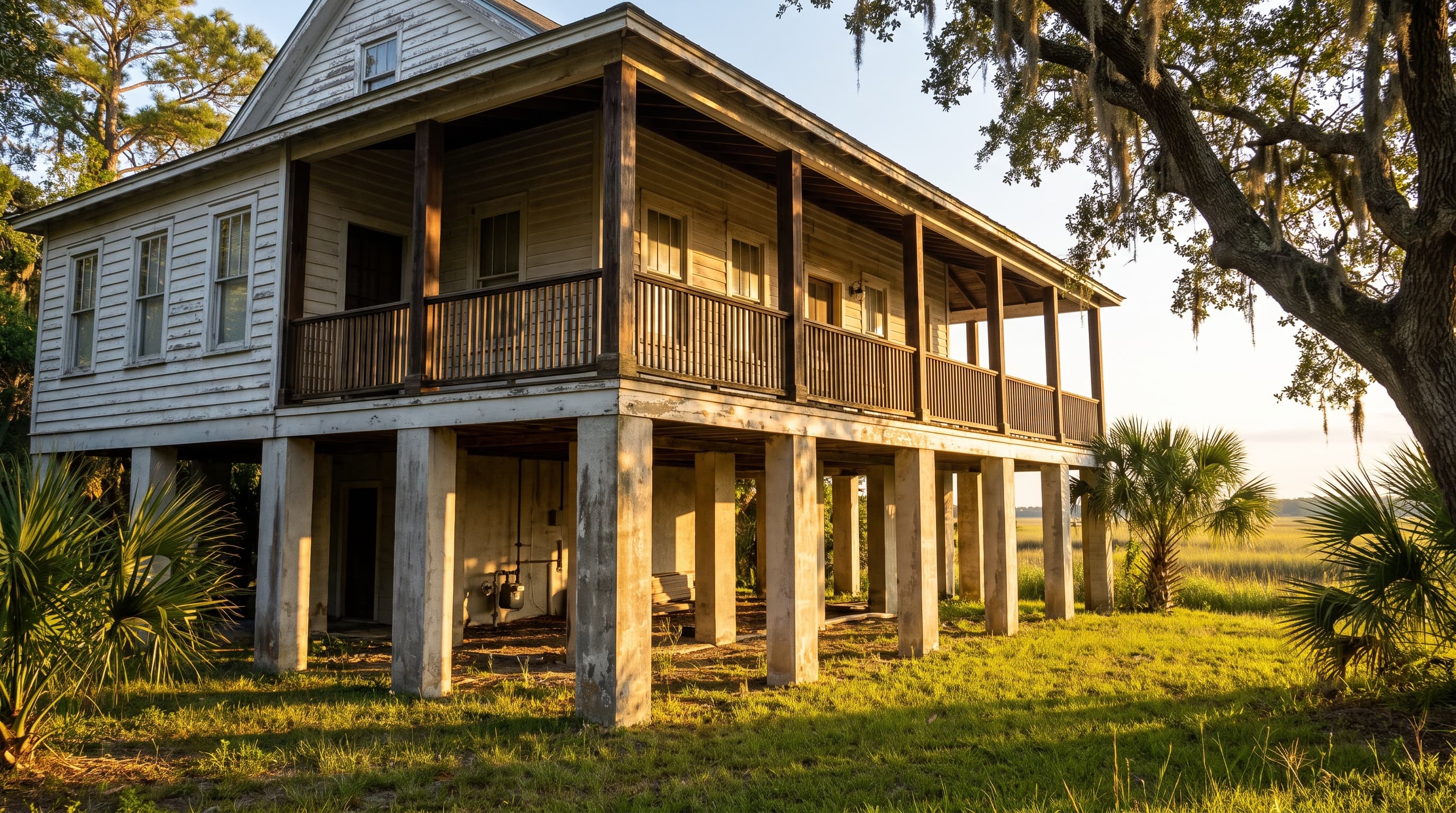
Is flood insurance required Georgia-wide for every mortgage? No. Federal law requires it only when two conditions are both true: the home sits in a FEMA Special Flood Hazard Area (zones beginning with A or V), and the loan comes from a federally regulated or insured lender. Outside that high-risk zone, no federal rule forces you to buy a policy. Your lender can still require one, though. FEMA says plainly that a lender "retains the prerogative to require flood insurance as a condition of providing financing, regardless of the location of a structure."
So the honest answer to the headline question is: some may, and the law doesn't stop them. Below is how the federal rule works, how to look up a Georgia address, what a map change can do for you, and why many coastal and river-county buyers buy coverage even when no one requires it.
When is flood insurance required for a mortgage in Georgia?
The federal purchase requirement applies to homes in a Special Flood Hazard Area (SFHA) when the mortgage comes from a federally regulated or insured lender. The Georgia Environmental Protection Division's floodplain management page says owners in SFHAs "are required to purchase flood insurance if they have a mortgage from a federally regulated or insured lender."
FEMA's flood zone glossary defines an SFHA as an area with a 1-percent annual chance of flooding, often called the 100-year flood. Those zones carry these labels:
-
A, AO, AH, A1-A30, AE, A99, AR
-
V, VE, V1-V30 (coastal zones with wave action)
How much coverage is required? Under the FDIC's version of the federal rule (12 CFR 339.3(a)), coverage must be "at least equal to the lesser of the outstanding principal balance of the designated loan or the maximum limit of coverage available." For homeowners buying through the National Flood Insurance Program (NFIP), FloodSmart lists limits of up to $250,000 for the building and up to $100,000 for contents.
Here's a simple example. Say you're buying a home in an AE zone in Chatham County with a $300,000 loan. The NFIP building limit is $250,000, so that is the lower of the two numbers and the federal minimum. With a $180,000 loan, the minimum would be $180,000. Your lender can ask for more, and contents coverage is a separate decision.
Do you have to use the NFIP? No. According to the Government Accountability Office, "In 2019, several federal financial regulators issued an interagency rule requiring lenders to accept qualifying private insurance to satisfy the mandatory purchase requirement." If a private policy meets the standard, your lender has to accept it.
Can a lender require flood insurance if I'm not in a flood zone?
Yes. A lender's requirement outside the SFHA is a lending decision. It doesn't come from Georgia law or federal law. FEMA's Letter of Map Amendment page confirms the lender "retains the prerogative to require flood insurance as a condition of providing financing, regardless of the location of a structure."
In practice, that means two homes on the same street, both mapped Zone X, could face different requirements depending on who's making the loan. Ask your loan officer early, before you're under contract if you can: "What is your policy on flood insurance for properties in Zone X or shaded Zone X?" Get the answer in writing if it will affect your monthly payment or which lender you pick.
How do I check the flood zone for a Georgia address?
Georgia has an unusual setup. On Aug. 16, 1999, the state agreed with FEMA to take responsibility for developing and updating flood insurance rate maps countywide for all 159 counties, according to Georgia EPD. The state reports 584 participating NFIP communities across all 159 counties, which is 89% of Georgia communities with mapped SFHAs.
Step by step:
-
FEMA Flood Map Service Center. Go to msc.fema.gov, which FEMA calls "the official public source for flood hazard information produced in support of the National Flood Insurance Program." Search by address, place name, or coordinates.
-
georgiadfirm.com. The state's site, run by Georgia DNR and EPD, returns property-specific flood risk information when you enter an address (Georgia EPD).
-
Savannah buyers have two more tools. The City of Savannah points residents to SAGIS.org for flood zone lookups, and the city keeps a searchable database of elevation certificates on file, organized by street name. If a previous owner already paid for an elevation certificate, you may find it there.
Do this before you make an offer, not after the appraisal. Finding out during underwriting that a home is in an AE zone can change your payment and your closing timeline.
What do the flood zone letters mean for my loan?
Based on FEMA's zone definitions:
-
A, AE, AH, AO, AR, A99, V, VE and numbered A or V zones: High risk (SFHA). The federal requirement applies if your lender is federally regulated or insured.
-
Zone B or shaded X: Moderate hazard, between the 100-year and 500-year flood limits. No federal requirement. Your lender may still require coverage.
-
Zone C or unshaded X: Minimal hazard. No federal requirement. Your lender may still require coverage.
GAO's October 2026 report describes the areas outside SFHAs as places "where flood insurance is not required." That's accurate for federal law. It says nothing about what your particular lender will do.
Can I get my home removed from a flood zone?
Sometimes. FEMA's maps show areas, and a single house may sit higher than the surrounding ground. A Letter of Map Amendment (LOMA), according to FEMA, "officially removes a property and/or structure from the SFHA" and eliminates "the federal flood insurance purchase requirement as a condition of federal or federally backed financing."
What to know before you apply:
-
FEMA charges no fee to review or process a LOMA.
-
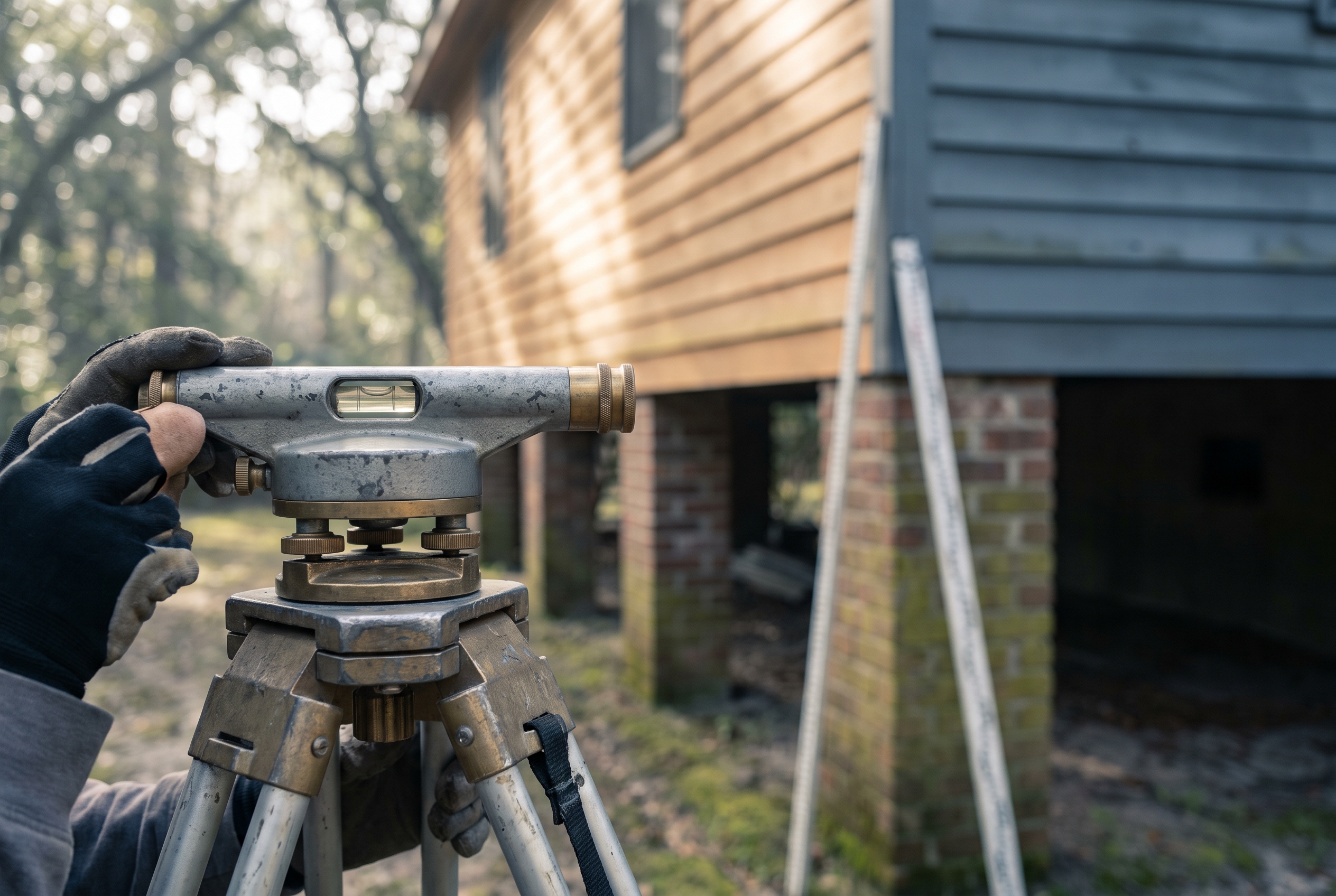
Most people still pay a professional. Most applicants need a licensed land surveyor or engineer to prepare an Elevation Certificate, and that work is a real out-of-pocket cost.
-
The elevation test: for a structure, the lowest adjacent grade (the lowest ground touching the house) must be at or above the base flood elevation.
-
How to file: use the MT-EZ form for a single residential lot, the MT-1 package, or FEMA's Online LOMC system.
One caution: a LOMA ends the federal requirement, but it doesn't end your lender's discretion. The same FEMA page that describes the LOMA is where the "retains the prerogative" language appears.
When does a flood policy take effect?
Per FloodSmart, NFIP coverage generally starts 30 days after purchase. There are exceptions:
-
No waiting period when you buy the policy as part of a mortgage transaction, so a required policy bought at closing won't delay coverage.
-
A one-day wait applies to properties newly designated high-risk.
If you skip coverage at closing and decide later to buy it voluntarily, expect the 30-day wait. Don't plan to buy a policy when a storm shows up in the forecast.
Savannah adds a timing warning for map changes: "It is important that your flood insurance policy has been in effect 30 days prior to the effective date if your structure's risk is increasing" (City of Savannah). If a pending map revision would move your home into a higher-risk zone, talk to an insurance agent well before the new map takes effect.
Should I buy flood insurance if my Georgia home isn't in a flood zone?
It's worth pricing a policy, especially on the coast or near a river. Here's why:
-
Your homeowners policy probably won't cover it. "Most homeowners and renters insurance do not cover flood damage," according to FloodSmart.
-
Claims happen outside the zones. FloodSmart's homepage says "almost one-third of NFIP flood insurance claims come from OUTSIDE high-risk flood areas."
-
Few people outside the zones are insured. GAO found that "Although the purchase rate for properties in SFHAs was 43 percent in April 2026, it was significantly higher than the 2 percent rate for properties outside SFHAs" (GAO-27-108012).
-
The maps have limits. GAO notes that "when Congress first directed FEMA to identify SFHAs in the 1970s, available technology only allowed FEMA to identify primarily coastal and riverine risk." Using First Street data, GAO counted "about 13 million high-risk properties identified by First Street that FEMA does not consider as being in an SFHA." That's a national figure, but it shows that a Zone X label isn't a guarantee.
The coastal case. In Savannah and the rest of Chatham County, a home just outside an AE or VE line still shares the same tidal and storm conditions as its neighbors inside the zone. The city says its floodplain management plans "help reduce flood insurance premiums by 25% for property owners participating in the National Flood Insurance Program" (City of Savannah). That can make a voluntary policy easier to afford than you might expect, so get a quote before you decide.
The river-county case. GAO's point that the original maps focused on coastal and riverine risk cuts both ways. River corridors were mapped, but flooding away from mapped streams may not show up as clearly. If you're buying near a creek or in a low spot in a river county, or anywhere water collects after heavy rain, use the state and FEMA lookup tools and ask the seller about past water problems.
Could an NFIP lapse delay my closing this fall?
Possibly, if the home needs a policy. FEMA's reauthorization page says that "On Sept. 2, 2026, the president signed legislation passed by Congress that extends the National Flood Insurance Program's (NFIP's) authorization to Dec. 11, 2026." If authorization lapses, FEMA keeps paying valid claims but would stop selling and renewing policies. FEMA cites a National Association of Realtors estimate that a lapse affects about 1,300 property sales a day, or about 40,000 closings a month.

If you're closing on an SFHA home in December, ask your lender and insurance agent now how they would handle a lapse. Because lenders must accept qualifying private flood insurance, a private policy is one alternative to discuss. Get a quote early instead of waiting until the week before closing.
Checklist for Georgia buyers
-
Look up the zone before you make an offer on msc.fema.gov or georgiadfirm.com. In Savannah, also check SAGIS.org and the city's elevation-certificate database.
-
Ask your loan officer what the lender's policy is for Zone X and shaded X properties.
-
If the home is near a zone line, look for an existing Elevation Certificate or price one from a licensed surveyor.
-
Consider a LOMA if the house appears to sit at or above the base flood elevation. FEMA charges no fee, but the surveyor does.
-
Price a policy even if you don't need one, through the NFIP and at least one private carrier, and remember the 30-day wait if you buy after closing.
-
Closing after early December? Plan around the Dec. 11, 2026 NFIP deadline.
Related reading
-
Should You Take a 7/6 ARM or a 30-Year Fixed on a Typical Georgia Home?
-
What Can Georgia's Insurance Commissioner Do About Your Premium?
-
How to Close on a Georgia Home When a Hurricane Freezes Insurance