
The short answer on an ARM vs fixed mortgage Georgia buyers face
For most Georgia buyers, a 30-year fixed is the safer choice. A 7/6 ARM can make sense only if you have a firm plan to sell or refinance within seven years and could absorb the worst-case reset. On a $284,464 loan, the ARM saves about $143 a month, but the payment could rise about $873 at the first reset.
Adjustable-rate mortgages are making a comeback. According to ICE's October 2026 Mortgage Monitor, released Oct. 5, ARMs accounted for more than 11% of rate locks, their largest share in nearly four years. The reason is easy to see: fixed rates have pushed past 7%, and an ARM's lower starting rate looks like relief.
The real question for a Georgia buyer is narrower than "are ARMs back?" It is whether the savings on a typical Georgia home are big enough to justify the risk, and whether you are the kind of borrower who can live with that risk. Below, we run the numbers on the state's median-priced home.
Where rates stand right now
Different surveys measure rates differently, so it helps to see them side by side:
-
Freddie Mac (weekly average, Oct. 1, 2026): the 30-year fixed averaged 7.28%, up from 7.03% the prior week and 6.34% a year ago. The 15-year averaged 6.60%. (Freddie Mac PMMS)
-
MBA (contract rate, week ending Sept. 25, 2026): the 30-year fixed conforming rate rose to 7.3% from 7.12%, with 0.75 points. The 5/1 ARM rose to 6.47% from 6.1%, with 1.20 points. (MBA Newslink)
-
ICE: its Conforming 30-year Fixed Rate Index reached 7.2% on Sept. 24.
-
Mortgage News Daily (daily index of top-tier borrower rates, Oct. 5, 2026): 30-year fixed at 7.61% and 7/6 SOFR ARM at 6.87%. (Mortgage News Daily)
"Mortgage rates jumped to their highest level in almost three years, pushing borrowers to the sidelines," said MBA's Joel Kan. "The 30-year fixed rate increased for the sixth consecutive week to 7.3%."
MBA found that ARMs, "with rates around 80 basis points lower than fixed rate loans, accounted for 10.3% of applications, the highest share since October 2025." The week before, HousingWire reported the ARM share at 9.8%, so the share is climbing week over week.
The setup: a typical Georgia home
The Georgia Association of Realtors' August report put the statewide median sales price at $355,580, up 1%. Closed sales fell 6% to 10,537, days on market rose 7% to 58, and months' supply was 5.1. That median is in line with GAR's midyear report, which put the January through June 2026 year-to-date median at $360,000.
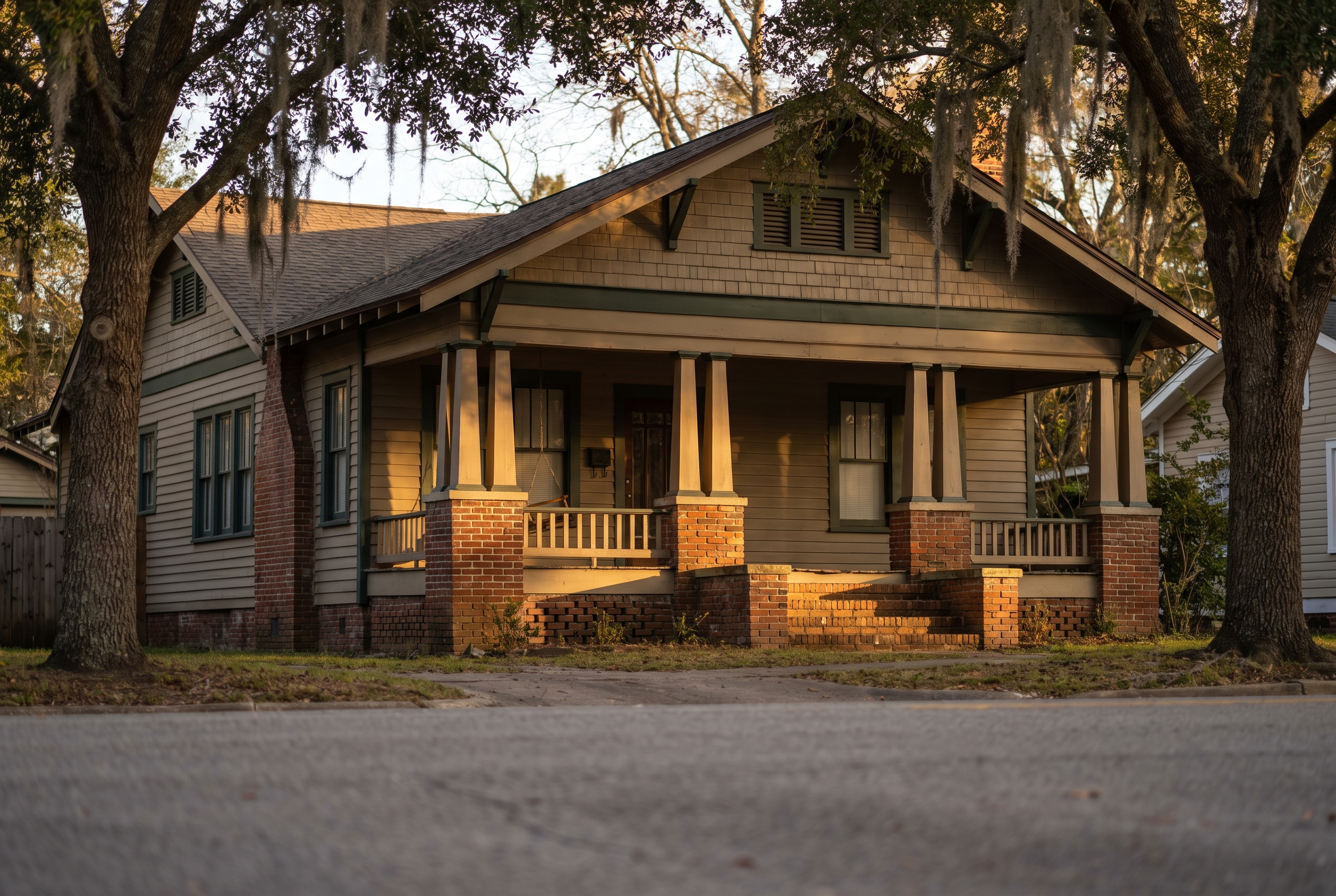
With 20% down ($71,116), the loan is $284,464. That is well inside the conforming limit of $832,750 that MBA uses in its survey, so this is a standard conforming loan, not a jumbo.
For a fair comparison, we used one source on one day: Mortgage News Daily's Oct. 5 index, 7.61% fixed vs 6.87% on the 7/6 ARM. Those are top-tier borrower rates, so your quotes may differ. What matters most here is the gap between the two (0.74 point), which is close to the roughly 80 basis points MBA reports.
Side by side: the first seven years
| Loan: $284,464 (20% down on $355,580) | 30-year fixed at 7.61% | 7/6 ARM at 6.87% | | --- | --- | --- | | Monthly principal and interest | About $2,010 | About $1,868 | | Monthly difference | ARM about $143 lower | | | Savings over 84 months | About $12,000 in favor of the ARM | | | Balance owed after 7 years | About $261,650 | About $258,750 | | Total 7-year advantage if you sell or refinance before reset | About $14,900 in favor of the ARM | |
These are our own calculations, principal and interest only. They exclude property taxes, homeowners insurance and mortgage insurance, which will make your real monthly payment higher on either loan.
The ARM also pays down a little more principal, because more of each payment goes to principal at a lower rate. That is why the ARM borrower owes about $2,900 less at year seven.
How a 7/6 ARM works, in plain English
A 7/6 ARM has a fixed rate for the first seven years. After that, the rate adjusts every six months. According to Freddie Mac, its SOFR-indexed ARMs (3/6, 5/6, 7/6 and 10/6) use a 30-day compounded average of SOFR as the index. The lender adds a margin, which Freddie Mac requires to be between 1 and 3 percentage points.
Caps limit how far the rate can move. Per HSH's ARM guide, a 7/6 SOFR ARM carries 5/1/5 caps:
-
5: the first adjustment can raise the rate by up to 5 percentage points.
-
1: each later six-month adjustment can move up to 1 point.
-
5: the rate can never go more than 5 points above the starting rate.
For comparison, HSH lists 5/6 ARMs at 2/1/5. The key point for a 7/6 borrower: the first reset can use the full lifetime cap in one step.
What happens at the reset
We cannot tell you where SOFR or your lender's margin will be seven years from now, and no one else can either. What we can do is show the range. The reset arrives in month 85, on a remaining balance of about $258,750 paid over 276 months.
| Scenario at first reset | New rate | Monthly P&I | vs ARM starting payment | vs 30-year fixed | | --- | --- | --- | --- | --- | | Middle case (+2 points) | 8.87% | About $2,201 | About $333 more | About $191 more | | Worst case (+5 points, the cap) | 11.87% | About $2,741 | About $873 more | About $730 more |
Our calculations, principal and interest only.
Reset shock is not hypothetical. ICE reports that 7-year ARMs originated in 2020 and resetting next year face the "largest median payment increase at approximately $1,066 per month, or 36%." ICE also counts about 180,000 ARMs scheduled for a first reset in 2027, up from roughly 150,000 in 2026.
The overall risk across the market is still small. ICE says there are 3.1 million active first-lien ARMs, the most in 5.5 years, but that is "just 5.6% of active mortgages." As ICE's Andy Walden put it: "ARMs are becoming more attractive to borrowers looking for relief from today's higher fixed rates, but the overall market exposure to adjustable payments remains relatively limited." That is the market. Your own household's exposure is the part that counts.
The qualification trap
This is the part many buyers miss. Under Fannie Mae's Selling Guide B3-6-04, ARMs with a fixed period of five years or less are qualified at the maximum rate that could apply in the first five years. ARMs with longer fixed periods, such as a 7/6, are qualified at "no less than note rate" (with an exception for higher-priced loans under Reg Z).
In practice, a lender can approve you for a 7/6 based on the lower starting payment, not the payment you might face after reset. That can let a buyer stretch to a bigger loan than they could handle at a higher rate. Read that as a warning, not a perk. If the ARM is the only way your budget works, the ARM is probably the wrong loan.
The Georgia Dream catch
If you plan to use Georgia's down payment assistance, this decision is already made for you. The Georgia Department of Community Affairs states that Georgia Dream "loans are 30-year fixed interest rate mortgages." As of July 8, 2026, the assistance is the lesser of 5% of the price or $10,000 for the Standard program, and the lesser of 6% or $12,500 for the PEN and Choice programs. Buyers using that help cannot take an ARM as their first mortgage.

Who can reasonably consider a 7/6 ARM
-
Buyers with a firm plan to move within seven years, such as a planned job relocation or a starter home you expect to outgrow.
-
Buyers whose income is likely to rise in a way they can document, not just hope for.
-
Buyers with reserves who could cover a payment jump of roughly $730 to $873 a month on a loan this size without strain.
Who should stick with the 30-year fixed
-
Buyers stretched at qualification. If you only qualify because the ARM's starting payment is lower, you are taking the riskiest version of this bet.
-
Buyers planning to stay long-term. If you expect to be in the house past year seven, the early savings can be wiped out quickly at reset.
-
Buyers whose plan is "I'll refinance." Refinancing depends on future rates, your credit, your income and your home's value at that time. None of that is guaranteed.
-
Georgia Dream users, who are limited to the 30-year fixed anyway.
A checklist before you choose
-
Ask each lender for the margin on the ARM, in writing. Freddie Mac allows 1 to 3 points, and a higher margin means a higher rate at every reset.
-
Confirm the caps. For a 7/6, expect 5/1/5, which means the first reset can rise by the full 5 points.
-
Ask for the worst-case payment on your loan amount. Check it against your Loan Estimate and ARM disclosure.
-
Compare points, not just rates. In MBA's survey, the 5/1 ARM averaged 1.20 points vs 0.75 on the 30-year fixed, which eats into the ARM's savings at closing.
-
Run your own break-even: monthly savings times the months you realistically expect to keep the loan, minus any extra upfront cost.
-
Budget the full payment. Our figures are principal and interest only. Taxes and insurance come on top of either loan.
The ARM is a reasonable tool for a specific buyer with a specific timeline. It is not a way to afford more house. If you are unsure which camp you are in, the 30-year fixed costs about $143 a month more on a typical Georgia home and removes the reset question entirely.
Related reading
-
Should You Take a Builder Adjustable Rate Mortgage in Atlanta?
-
What the September Rate Jump Does to a Georgia Mortgage Payment
Sources
-
MBA Newslink: Mortgage Applications Decrease in Latest MBA Weekly Survey (Oct. 1, 2026)
-
HousingWire: As rates push past 7%, mortgage applications slip again (Sept. 23, 2026)
-
Georgia REALTORS: Listings, Sales Decrease While Prices Hold Steady In August
-
Georgia REALTORS: Georgia Housing Market Shows Stability At Midyear
-
Fannie Mae Selling Guide B3-6-04: Qualifying Payment Requirements
Payment figures are our own calculations, principal and interest only, and do not include taxes, insurance or mortgage insurance. This article is for general information and is not a rate quote or financial advice.